

Retail Performance Requires Operational Alignment
Retail growth is often constrained not by demand, but by the coordination between product development, production readiness, and commercial visibility.
We work with retail and brand operators to align demand signals, supply planning, and performance analytics into a coherent operating structure.
How Retail Performance Breaks
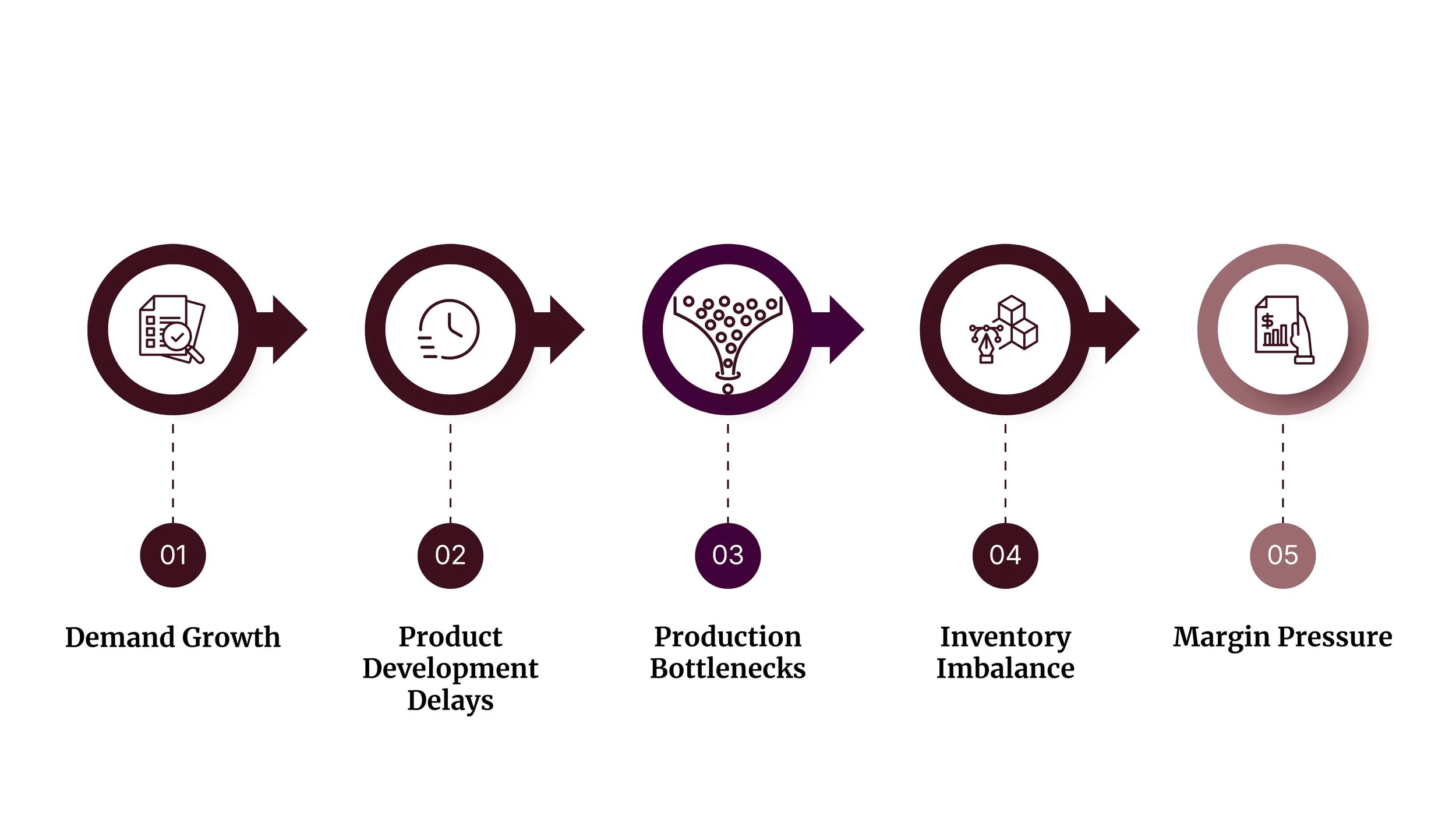
Structural Constraints Observed Across Retail Operations
• Product development cycles disconnected from supplier readiness • Fabric sourcing timelines misaligned with production planning • Inventory visibility fragmented across channels • Sales reporting disconnected from supply and production decisions • Margin pressure caused by weak cost transparency across production stages

Retail Operating Alignment Framework
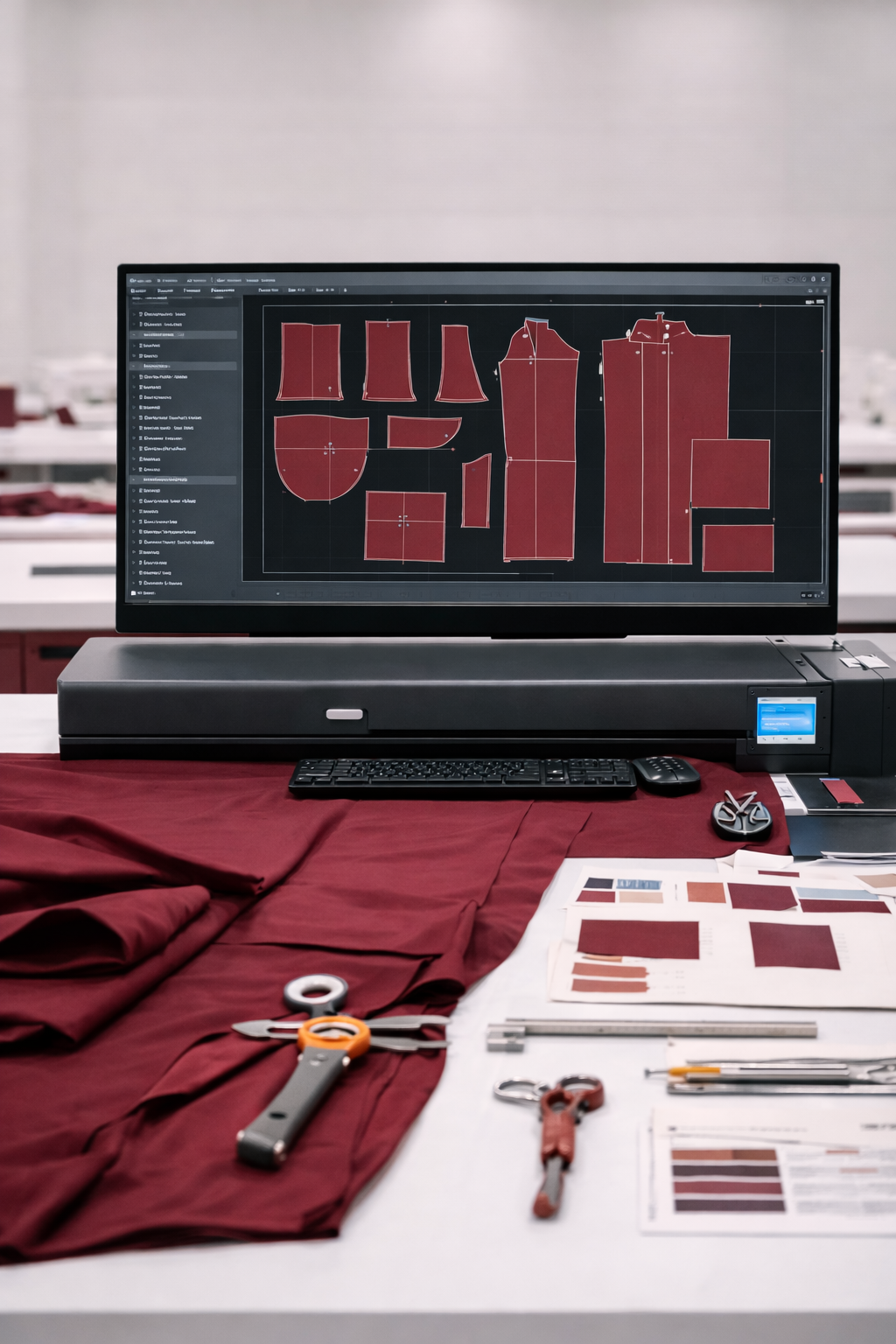
PRODUCT DEVELOPMENT
Coordinating design cycles, technical specification development, and supplier readiness.
OUTCOMES:
Structured product development timelines
Technical sheets aligned with production feasibility
Earlier coordination between design and sourcing teams
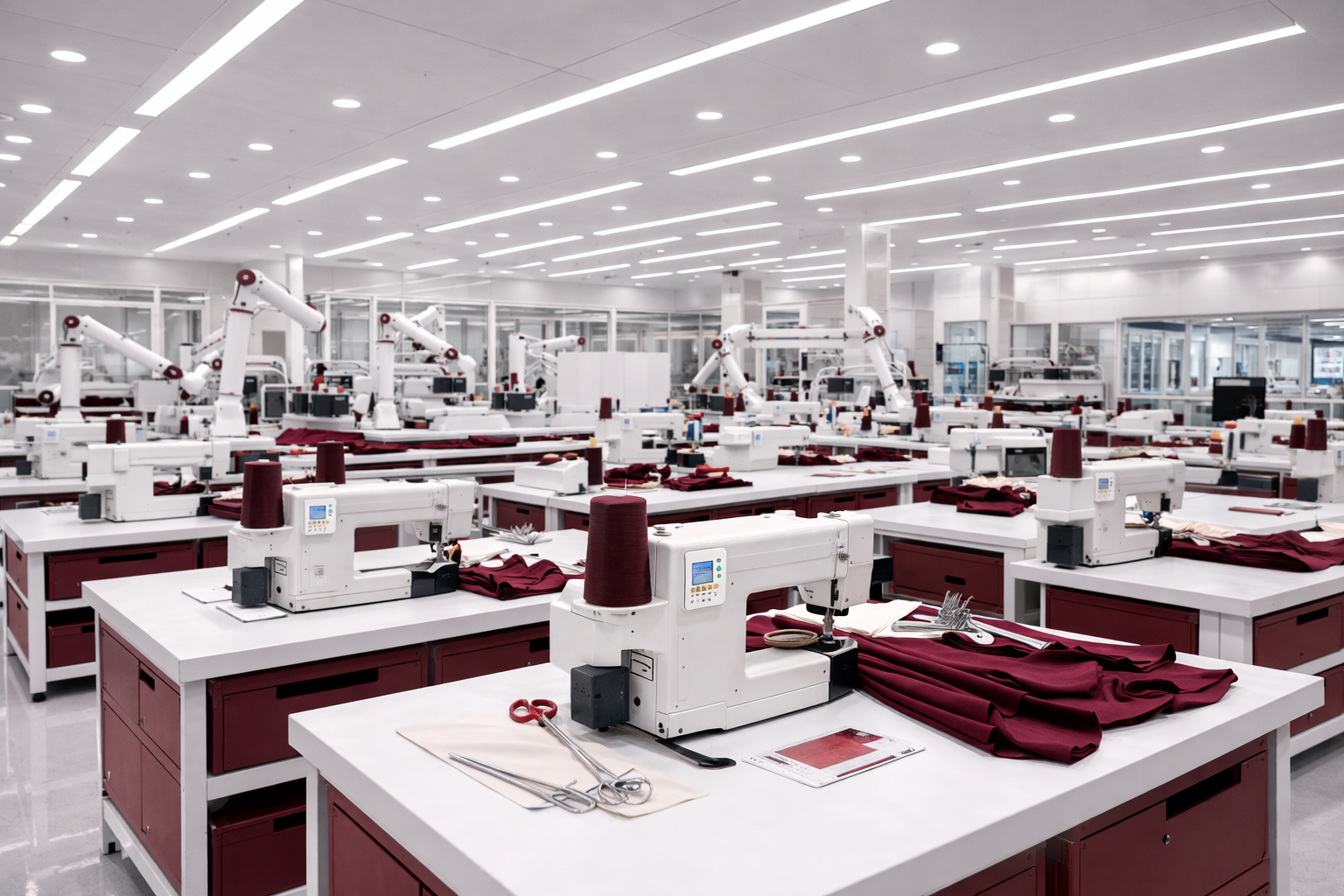
SUPPLY AND PRODUCTION
Aligning demand forecasts with supplier capacity, production planning, and logistics coordination.
OUTCOMES:
Forecast-informed production planning
Supplier coordination frameworks
Production timelines aligned with commercial cycles

COMMERCIAL PERFORMANCE
Designing analytics systems that connect retail performance with product and supply decisions.
OUTCOMES:
SKU-level performance visibility
Inventory turnover analytics
Structured retail performance reviews
Retail leadership requires integrated visibility across product performance, supply coordination, and margin drivers.
Below text show mock dashboard elements:
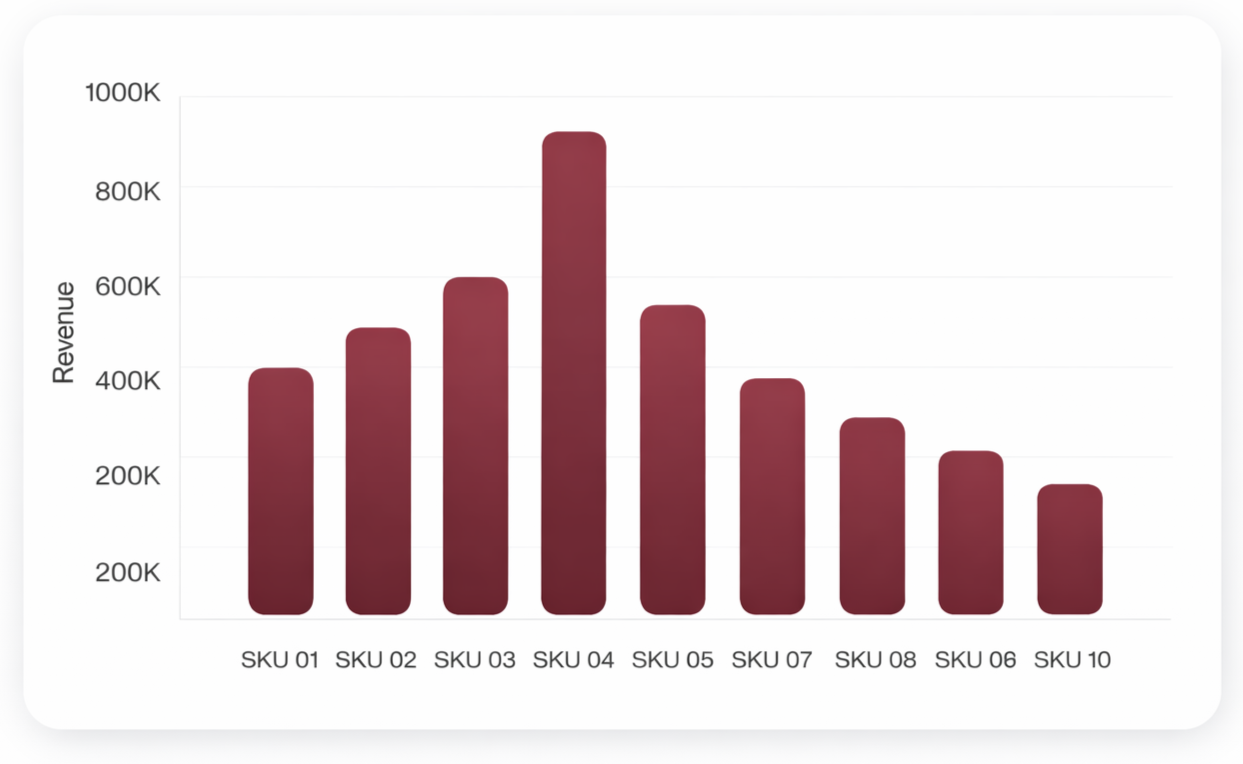
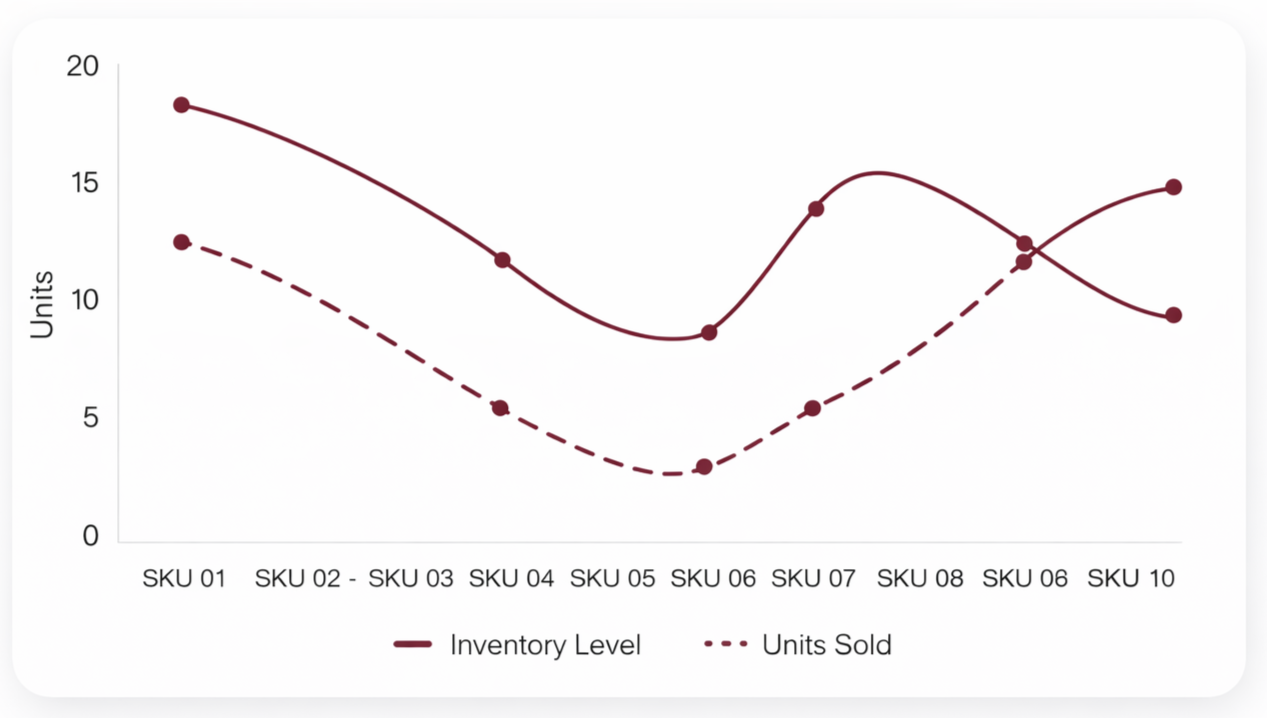
Retail performance is best understood at the SKU level, where product demand, pricing, and inventory velocity intersect.
Analyzing SKU performance allows leadership teams to identify which products are driving revenue, which are underperforming, and where inventory exposure exists.
Typical analysis focuses on:
• Revenue contribution by SKU
• Sell-through rate across retail channels
• Inventory remaining relative to demand velocity
• Margin performance by product
SKU Performance Chart
Inventory turnover reflects how efficiently retail inventory converts into sales over time.
Low turnover often indicates overproduction, weak demand forecasting, or inefficient inventory allocation across channels.
High-performing retail operators monitor inventory movement closely to maintain balanced stock levels and avoid margin erosion.
Key metrics analyzed include:
• Inventory turnover ratio
• Weeks of inventory remaining
• Stock-out frequency
• Channel-level inventory allocation
Inventory Turnover Analysis
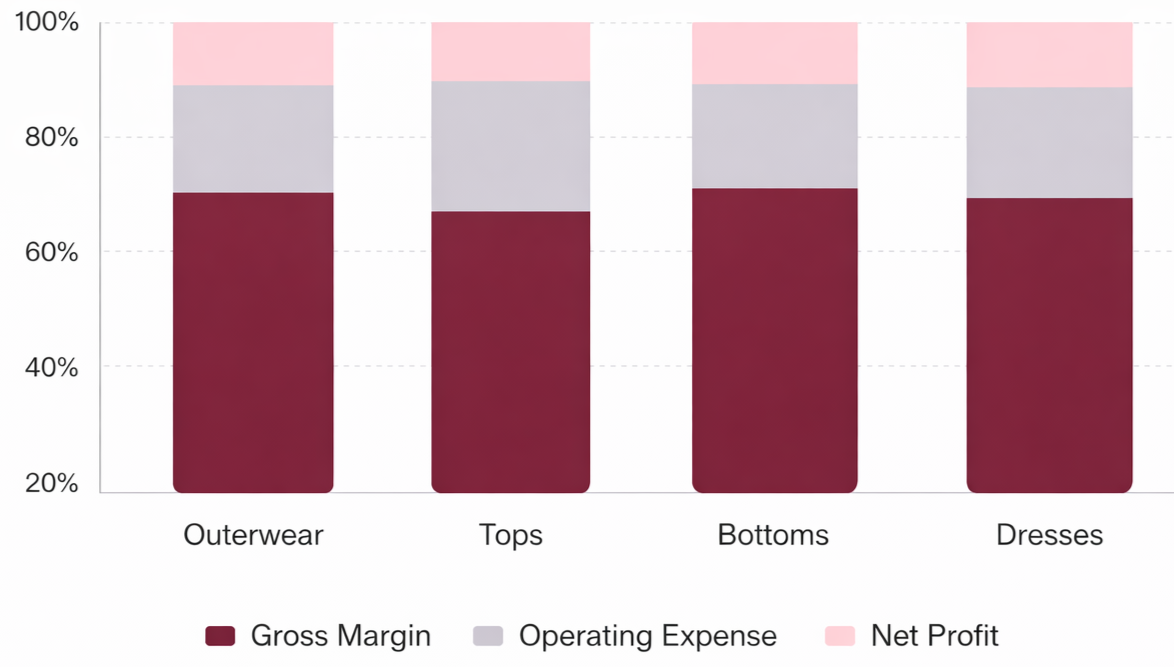
Retail profitability depends not only on sales volume but on the margin structure across product categories.
Category-level analysis helps identify where production costs, supplier pricing, or discounting practices are compressing margins.
This visibility allows leadership teams to rebalance product mixes and improve commercial performance.
Typical analysis includes:
• Gross margin by category
• Production cost contribution
• Discounting impact on margins
• Profit contribution by product segment
Margin Performance by Product Category
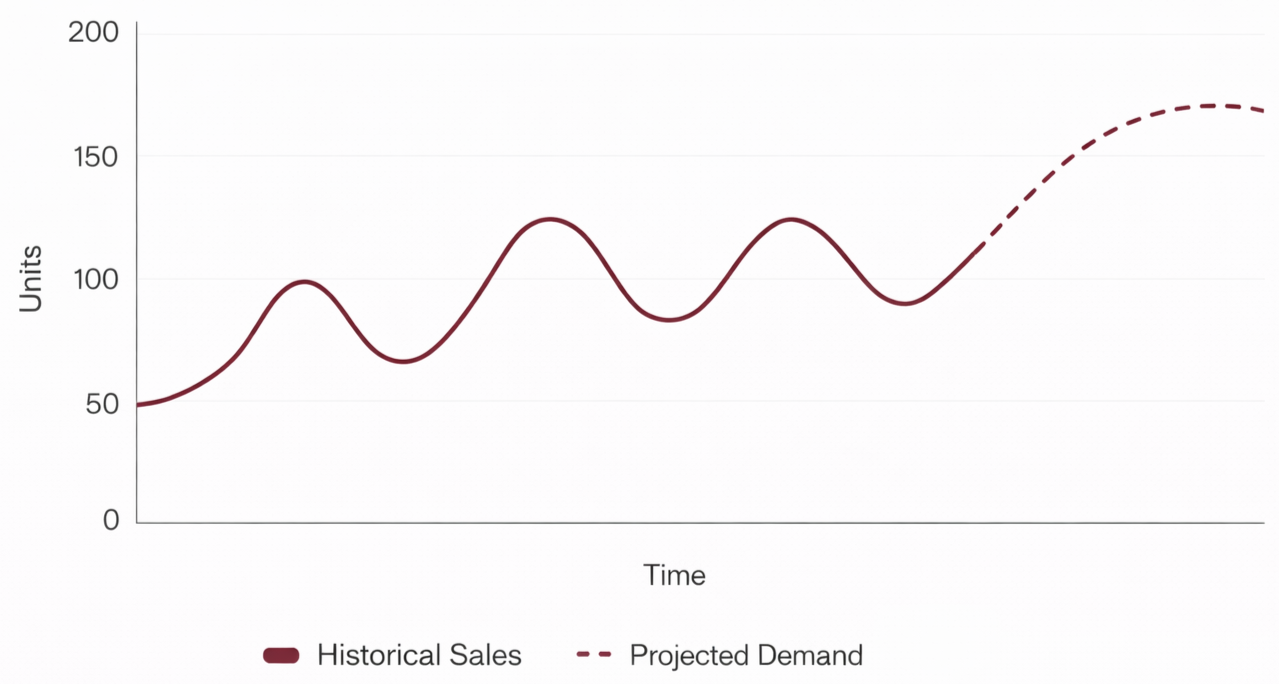
Retail supply coordination depends on anticipating future demand patterns across product categories and sales channels.
Demand forecasting models help organizations plan production cycles, coordinate suppliers, and maintain balanced inventory levels.
Effective forecasting integrates historical sales patterns with seasonal trends and promotional cycles.
Common forecasting inputs include:
• Historical SKU sales data
• Seasonal demand cycles
• Promotional activity impact
• Channel-level demand patterns
Demand Forecasting Curve
Retail Performance Requires Coordination
Retail performance constraints rarely emerge from demand alone.
More often they reflect misalignment between product development cycles, production readiness, inventory coordination, and commercial visibility.
A retail performance diagnostic helps identify where these structural gaps exist and what adjustments are required to stabilize performance.
Diagnostic sessions available for retail operators evaluating performance improvement.